


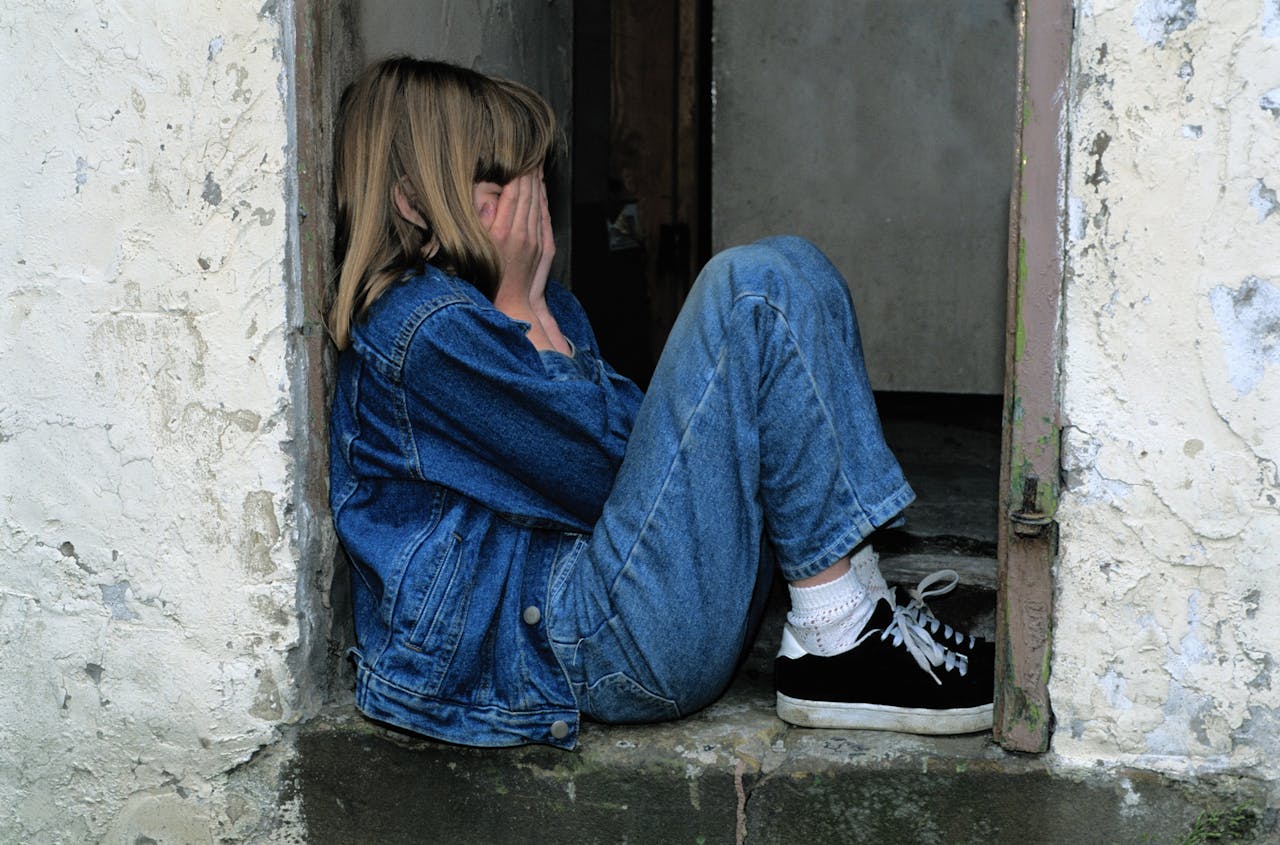
DISCRIMINATORY HARASSMENT AND HOSTILE LEARNING ENVIRONMENT IN SCHOOLS
Harassment in schools manifests when a student is targeted and discriminated against due to their national origin, race, religion, disability, sexual orientation, gender, or other identifiable characteristics, leading to an unsafe and hostile school environment.
What are some examples of harassment? Examples of harassment in schools include physical acts, verbal insults, social exclusion, and other behaviors that degrade or isolate the student, significantly impacting their ability to engage in school activities, feel safe, and succeed academically. These behaviors may range from name-calling and physical intimidation to more covert actions, such as spreading rumors or sabotaging social relationships, leading to a hostile learning environment.
A school district may be liable for discriminatory harassment if it lacks a strong, widely disseminated, and consistently enforced policy prohibiting it and if no effective complaint procedure is in place. Additionally, schools are required to provide training for their administrators, employees, students, and parents.
Schools can also be held responsible for the consequences stemming from a failure to take immediate, appropriate steps to respond to a complaint about harassment or bullying, to terminate it, and to discipline the offending party, whether an employee or another student. When a school knows that a hostile learning environment exists but fails to act on this knowledge, it can be viewed as tacitly approving this activity. In such cases, school districts have been found liable for enabling a hostile school environment that prevents students from accessing their education and learning.
A lawsuit predicated on discriminatory harassment and resulting hostile educational environment is likely to prevail if there is a clear and compelling argument that the school failed to meet the professional standard of care, failing to respond to known incidents or creating a hostile learning environment that negatively affected a student’s education. On the other hand, a lawsuit is likely to fail if the school maintained appropriate policies, procedures, and training and had no actual knowledge or reason to believe that an employee’s or student’s behavior created a harassment environment.
For a discrimination and hostile school environment lawsuit to prevail, attorneys must understand school duties to establish harassment-free environments proactively; what qualifies as a hostile learning environment; the school’s responsibility toward the student in a specific scenario; and relevant education law, as well as applicable statutes and regulations.
Understanding how a school administrator should respond and whether the administrator acted reasonably, appropriately, and within the professional standard of care in a specific circumstance will assist in developing a complaint or defending a suit.
In such cases, an education expert witness can help clarify which types of notice and knowledge should trigger an investigation, what qualifies as a hostile learning environment, whether the institution breached a legal or professional standard of care, and whether this breach was the most probable cause of any harm to the student.
What are Some Examples of Harassment and Discrimination?
Mike was a 14-year-old freshman in a small suburban high school. Since elementary school, he has had near-perfect attendance and good grades, and he has been well-liked by students and teachers. When his science teacher, Janet Frederick, asked Mike to help her set up science experiments for the following day’s classes after school, Mike was flattered. It wasn’t unusual to see students in her classroom after school.
The school policy was that if a student stayed after school, the parent needed to provide permission. This policy was sent to parents and discussed with all students at the beginning of each school year. Mrs. Frederick, however, had not yet sought permission for Mike to stay after school. John Foreman, the principal, never approved of Mike’s staying late, and Mike’s mother didn’t ask why he was coming home late three days a week. Mike and Mrs. Frederick were often alone in her classroom, and, at one point, another teacher reported it to the office. Additionally, contrary to school rules and policies, she drove him home in her car. Other students noticed that Mrs. Frederick favored Mike, letting him turn in homework late and often calling on him in class.
Mrs. Frederick and Mike developed a relationship that violated professional boundaries, constituted grooming, and was one that any reasonable teacher would guard against. Mrs. Frederick knew that, under school policy, she should neither be in her classroom alone with Mike nor drive him home in her car. The relationship turned sexual and continued for three months.
No one understood why Mike became increasingly distracted from schoolwork. His grades fell, he began missing school, and he didn’t turn in homework. Eventually, his school counselor asked to see him. In their second counseling session, Mike told her of the affair. Alarmed at his confession, Mike’s counselor immediately went to Mr. Foreman and reported what she was told. Child Protective Services was called, and a report was made. Mike’s mother was contacted, and law enforcement was notified. The same day, Mrs. Frederick was suspended. Rumors flew, and some of Mike’s classmates started commenting to him about the affair. He became increasingly upset and convinced his parents to enroll him in a private school where he could get a fresh start.
A year after Mike left the school, his parents filed a lawsuit against the district. The suit claimed that a hostile learning environment resulting from the sexual harassment and the subsequent retaliation by peers had developed and became intolerable for him, forcing him to leave the school and costing his parents thousands of dollars in tuition and transportation fees. Let’s look at the legal elements of what qualifies as a hostile environment, the merit of this hostile school environment case, and the aspects of defense.
Legal Elements of Sexual Harassment and Hostile Educational Environment Lawsuits
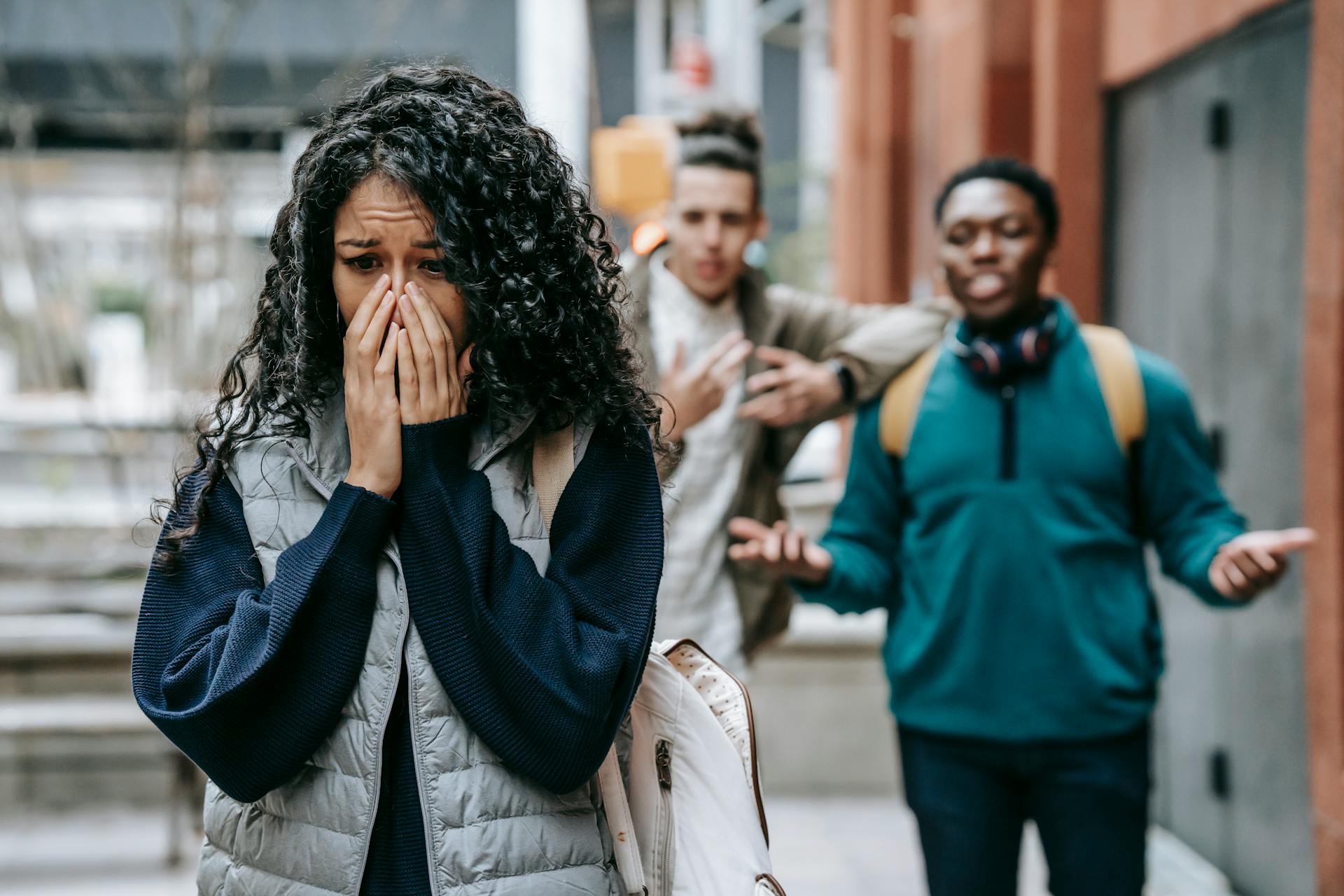
Two types of sexual harassment have been established by law: quid pro quo and hostile environment. These are relevant to both workplace and school harassment claims. Quid pro quo harassment involves the satisfaction of sexual demands as a condition of receipt of some benefit in return. On the other hand, hostile environment harassment, particularly in learning institutions, can be created when unwelcome sexual conduct becomes so severe or persistent that it creates an intimidating, threatening, or abusive environment that affects a student’s ability to participate in or benefit from an educational program or activity.
For this case analysis, we will apply the above legal analysis of what qualifies as a hostile learning environment and assume that a school employee who received a report that Mike was seen in Mrs. Frederick’s classroom after hours failed to act on it.
The plaintiff’s attorney will argue that the sexual harassment by the teacher became so pervasive and objectively offensive that it deprived Mike of access to educational opportunities provided to all students. Mike’s drop in grades and his leaving the school attest to this. The facts leading up to these circumstances are compelling: During the affair, he missed 30 days of school and wasn’t completing homework. Because of his continual discomfort with being around the teacher, the rumors swirling around their relationship, and the discriminatory harassment he received from classmates, Mike left the school. His attorney will argue that the hostile learning environment amounted to a deprivation of an educational opportunity.
In Vance v. Spencer County Public School District (231 F.3d 253 [C.A. 6th Cir., 2000]), the Sixth Circuit Court found that when sexually harassing behavior becomes so pervasive that it forces the victim to leave school on several occasions and ultimately forces the student’s withdrawal from school, the behavior rises to the level of systematically depriving the victim of access to education. The court sided with the student in this lawsuit over a hostile learning environment.
By contrast, the 11th Circuit Court ruled in Hawkins v. Sarasota County School Board (322 F.3d 1279 [11th Cir., 2003]) that three female students were not entitled to damages for student-on-student sexual harassment, despite the persistence and frequency of the behavior. In this hostile school environment lawsuit, none of the students’ grades suffered, no observable change in their classroom demeanor occurred, and none reported the harassment to their parents until months passed.
So, the defendant’s attorney in our earlier hostile learning environment example can raise a strong argument that, even though an inappropriate relationship occurred, no official with the authority to stop the behavior noticed it. Without notice, it is reasonable that Mike and Mrs. Frederick would not have been supervised differently from any other student or teacher in the school. The defense might also point out that, beyond a hostile learning environment, many factors in a child’s life can cause distractions from schoolwork, any of which could have contributed to Mike’s drop in grades, frequent absences, and transfer to another school. The defense attorney can argue that Mrs. Frederick was acting outside her scope of employment when she engaged in sexual behavior with Mike, and at no time did any sexual act take place at school.
The school must overcome the fact that an administrator knew or should have known that Mrs. Frederick was meeting with Mike alone in her classroom after school. The school has a duty and responsibility to proactively supervise all school-related activities and provide oversight and administrator presence during after-school hours to ensure that situations like this do not develop.
If the school cannot reasonably explain why it did not investigate Mrs. Fredrick’s breach of school policy, it would be liable for allowing an inappropriate relationship to develop and continue, resulting in a hostile learning environment. In that case, the school may have difficulty persuading a court that it could not have known that inappropriate behavior was occurring, because a policy violation investigation could have led to further discovery that would have put the school on notice of a possible inappropriate or prohibited relationship with a student.
If the principal had followed up, interviewing Mike and Mrs. Frederick to learn why he was frequently with her after hours, that would have weighed in the school’s favor and could have also prevented the relationship from escalating further and becoming sexual. If the principal reprimanded Mrs. Frederick for breaching policy and told her not to have students in her classroom after hours, this would also support the school’s case, depending on what other supervisory efforts the school took to keep a closer eye on Mrs. Fredrick.
A school’s follow-up to a report of potential misconduct or a violation of school policy may not prevent all inappropriate behavior. Still, it can reduce liability and prevent further harm, such as discriminatory harassment. Still, a school that fails to respond can be argued to have acted deliberately indifferent, thereby giving rise to a hostile learning environment.
Hostile School Environment Due to Racial Discrimination and Harassment Case Study
A sixth-grader of Mexican origin brought a three-inch pocketknife to school in violation of school rules. A teacher saw it and reported it to the principal, and the student received a three-day suspension. His father was called, and the boy was not allowed back to school until a conference with the principal and a re-entry plan could be developed.
Even before the student returned to school, his classmates spread rumors. “Carlos is Mexican. They always carry knives,” they said. When Carlos returned to school, some students began commenting so that he and the teacher could hear, “Go back to your own country! We don’t need any criminals here.” Mr. Marks, the teacher, listened to this and told the students to stop, and they did. In another class, the same students made the same remarks loud enough for the teacher, Ms. Romano, to hear. This time, the teacher didn’t say anything to the students. Neither teacher reported anything to the principal.
The school had an anti-harassment, intimidation, and bullying policy requiring teachers to file written reports of incidents. Still, it failed to provide appropriate training to help teachers distinguish between bullying incidents that needed to be reported to the administration and those where teachers were routinely instructed to handle classroom discipline. Failure to report as required by policy prevented the school from conducting a timely investigation to determine whether other discriminatory harassment incidents were occurring in different areas of the school outside of classroom time, thereby creating a hostile learning environment.
As a result, over time, the harassment increased and included incidents of harassment and threats during Carlos’ soccer practice and at the school bus stop. In Ms. Romano’s science class and other classes, Carlos stopped paying attention to the lessons; he was too worried about what the kids would say to him and that they might physically hurt him. After two months, Carlos, an otherwise good student, started failing science quizzes and not turning in his math homework. His grades began to go down.
When Carlos brought his report card home, his father started to worry. Finally, he called Mr. Boyd, the principal, and complained that Carlos was being picked on. Mr. Boyd said he knew nothing about it and would check into it. He spoke with Carlos’s teachers and discovered they heard the harassing comments. They had not followed the school’s anti-harassment policy, which required a formal written report to the principal. Mr. Boyd found this odd, given that these teachers had reported other inappropriate behavior to him.
After four months of falling grades and tolerating the discriminatory harassment, Carlos attempted suicide. One year later, after Carlos had been placed in a treatment center and transferred to a private school at considerable cost, his parents filed a lawsuit against the school on various state and federal claims. Again, let’s examine further what qualifies as a hostile environment based on the issues in this particular hostile school environment lawsuit and the legal elements relevant to the work of the plaintiff and defense attorneys.
Discriminatory Harassment and Hostile Learning Environment in Schools Based on Race or National Origin
Discriminatory harassment that can create a hostile work or school environment arises in the school context when racially harassing conduct by staff or students is so severe and pervasive that it distracts a student from his education. Examples of harassment in schools include oral, written, graphic, or physical conduct related to an individual’s race, color, or national origin that interferes with an individual’s ability to participate in or benefit from school programs.
Plaintiff and defendant attorneys should start by determining whether the school has created or allowed the existence of a school climate that encourages and permits a racially hostile learning environment that prevents a student from adequately learning or thriving.
The most common form of racial discrimination in education is harassment and bullying by other students. What are some examples of harassment? Among teachers, discriminatory harassment is most frequently linked to in-class discipline. This behavior is especially prevalent among African-American and Latino high school students who are treated differently and disciplined more regularly than their peers. Other examples of harassment in schools and discrimination by teachers can range from unfair grading to acceptance of discriminatory behavior from students in the classroom. Administrator-related discrimination is more common than teacher discrimination. Administrators may over-penalize minority students. Minority students are more likely to be suspended or expelled than their peers in the majority.
In a lawsuit based on an allegation that a racially hostile learning environment exists, the attorney’s focus should be on whether any difference in treatment of the student created a circumstance that limited the student’s ability to participate in and benefit from a program. In this situation, I will assume that both parties agree that Carlos experienced discriminatory harassment and that his grades went down due to the hostile school environment.
Carlos’s attorney will argue that the school breached the professional standard of care by failing to act reasonably and appropriately. He will say that the school ignored the students’ behavior, let the harassment continue, and gave the students tacit permission to keep it up, allowing a hostile learning environment to thrive.
The plaintiff’s attorney will have a strong argument if he can demonstrate that the teachers who heard the harassing comments of students fostered a hostile educational environment by merely telling the students to stop, but doing nothing more. The school had a written policy stating that this behavior would be reported to the principal and that appropriate action would be taken in accordance with the student code of conduct.
Suppose Carlos’s attorney can produce the policy, obtain deposition testimony from the teachers and the principal that reinforces the policy, and demonstrate that the policy was breached. In that case, he will have a strong position in this hostile-learning-environment lawsuit. The next focus of the case will be to demonstrate how this breach caused Carlos’s grades to decline and eventually force his withdrawal from school. Suppose these elements of a hostile school environment can be shown. In that case, the attorney might successfully recover the tuition the parents paid and damages under specific Constitutional provisions.
The defendant’s attorney will likely argue that intervening variables, such as the recent divorce of Carlos’s parents, caused distractions that resulted in the drop in Carlos’s grades. He might also argue that the decision for Carlos to attend a private school was not predicated on being forced out, but was a deliberate decision by one parent to place financial pressure on the other and to ensure that Carlos received a better education than was provided in the public school.
The attorney must show that the teachers acted reasonably when the students teased Carlos and that they followed established school procedures by telling the students to stop. He must show that it was reasonable and appropriate for the principal to suspend Carlos for bringing a knife to school. This was within the professional standard of care and in accordance with school policy. Finally, it can be argued that the school can’t control rumors or how students talk about one another.
Key Takeaways: School Liability in Hostile Learning Environment Lawsuits
In lawsuits alleging a hostile school environment, a school can be held liable if it is shown that the hostile climate prevented a child from benefiting from educational opportunities afforded to all students. In isolation, the facts of a case are not enough to establish liability; the merit of a lawsuit or successful defense against one hinges on whether the facts stem from deviations from accepted standards of practice.
Attorneys for the plaintiff and defendant will need to determine whether the facts contradicted school policies, resulted from disregard for professional standards or care, or could be foreseen given other relevant issues unique to a particular case. Concerning school administrators’ actions, the questions of “What did you know?”, “When did you know it?” and “What did you do about it?” are particularly relevant.
Suppose it can be shown that the totality of circumstances created a hostile learning environment that effectively deprived a student of an educational opportunity. In that case, plaintiff attorneys will have a strong argument. On the other hand, if it can be shown that the school had no knowledge of the circumstances that created a hostile educational environment, or it did know and acted reasonably and appropriately under the circumstances, or that forces outside the school environment caused harm to a student, then the defense may prevail.
Education Expert Services in Hostile Learning Environment Cases
Having provided consultation and expert witness services to schools, child-oriented agencies, parents, and hundreds of law firms throughout the United States and Canada, the School Liability Expert Group has built diversified and unparalleled expertise in education administration and student supervision laws and regulations.
Our clients value our prompt, individualized, and thorough services. In hostile learning environment cases, our court-qualified education expert witness can deliver trial and deposition testimony, offering expert opinions on what qualifies as discriminatory harassment and a hostile environment, whether a school breached the legal or professional standard of care, and whether the breach resulted in student harm.
Book a call today to discuss your case with an education expert.

Kathleen
Excellent article.